Stain or Paint a Deck in Georgia? Which One Actually Lasts in Our Humidity and UV
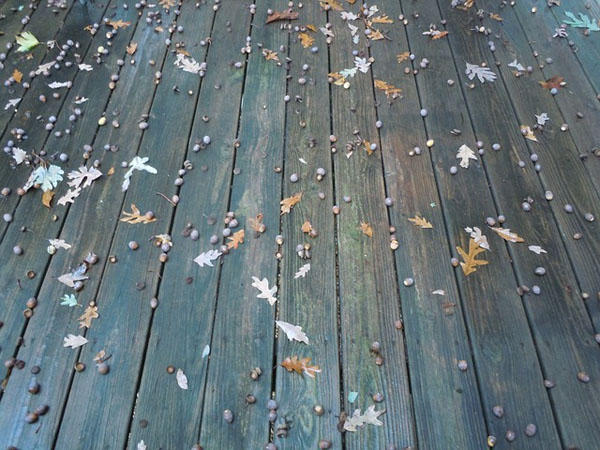
You are standing on the deck with the same decision every Georgia homeowner faces at the paint store: stain it or paint it. Both add color, both protect the wood, both cost you a weekend if you do it yourself. But a deck is not a fence and it is not siding. You walk on it. That one fact changes the answer, because a paint film has a place to fail on a deck floor that it simply does not have on a vertical wall.
Southern Perfection Painting Inc. (SPPI) has served Gwinnett County and the greater metro Atlanta area since 1984, and after 42 years refinishing decks through Georgia summers we do not answer this from a color chart. We answer it from the way each finish wears on a horizontal surface that takes foot traffic, standing water, hard afternoon UV, and spring pollen all at once. Here is what actually lasts on a deck here, and where the honest DIY line sits.
Should You Stain or Paint a Deck?
On a deck floor in metro Atlanta, a penetrating stain almost always outlasts paint, because a deck is a horizontal foot-traffic surface and paint forms a film on top of the wood while stain soaks into the grain. Foot traffic scuffs and cracks a paint film, water pools on a flat deck instead of running off, and once moisture works under the film it peels. Stain has soaked in, so it has nowhere to peel from. That is the whole argument.
This is exactly where a deck parts ways with a fence or a wall. Vertical surfaces shed water and never take a footstep, so paint can hold on them for years. Lay that same paint flat, put a grill and patio furniture and wet shoes on it, let an afternoon thunderstorm leave standing water in the low spots, and the film starts giving up along the traffic lanes first. We see it constantly: the perimeter of a painted deck still looks fine while the walking path down the middle is peeling.
When paint is still the right call on a deck
Paint is not always wrong. If your deck was already painted, staying with paint is usually the practical move, because stain will not soak into wood that already carries a paint film. Paint also makes sense on deck railings, balusters, and vertical trim that you want to match to painted house trim, since those parts take no foot traffic and shed water. The common setup we do is a solid-color stain on the deck floor and stairs where the wear is, with paint or solid stain on the rails to match the house. Just know the tradeoff: every future recoat of a painted deck means dealing with any peeling before you can put a new coat down.
How Long Does Deck Stain Last in Georgia?
On a metro Atlanta deck, plan on recoating a stain roughly every two to three years, with the finish type and sun exposure driving where you land. That is shorter than the same stain would last on a fence, and the reason is foot traffic plus standing water plus our climate all working the horizontal surface at once. A clear or light semi-transparent finish on a full-sun deck wears fastest. A solid-color stain on a shaded deck holds longest.
Three local forces set that timeline, and they do not hit every board equally:
- UV on the sunny elevations. West and south-facing sections of a deck take the long, hard metro Atlanta afternoon sun, and UV is the single biggest cause of graying and breakdown on exterior wood here. Pigment is what blocks UV, which is a big part of why a pigmented stain outlasts a clear seal-only finish on a deck.
- Humidity and standing water. Our summers are humid from May through September, and a flat deck holds water in the low spots after every afternoon storm instead of shedding it like a wall does. Wood that never fully dries is wood a paint film cannot bond to reliably, which is why film finishes struggle on horizontal surfaces here.
- Spring pollen and foot grit. The heavy March-and-April pollen layer settles into a flat deck and gets ground in by foot traffic, holding moisture against the finish and dulling it. A deck that never gets rinsed ages faster than one that gets a wash each spring.
"On the decks we refinish around the metro, the west-facing boards and the main walking lane are almost always the first to gray and wear. We have learned to read the deck by those two spots, not by the shaded corner that still looks new."
The lesson from our own jobs is that the finish type and the exposure, not the calendar, tell you when to recoat. Watch for graying, water that no longer beads on the surface, and any blotchy fade along the traffic lanes. When you see those, it is time to reclean and recoat, and a stain lets you do exactly that without scraping.
Why Does Paint Peel on a Deck in Georgia Humidity?
Paint peels on a deck because it is a film sitting on top of a horizontal surface that traps moisture underneath it, and Georgia's humidity keeps that moisture in play far longer than a drier climate would. Water gets into the wood through pooling, dew, and humid air, the sun then drives it back out, and the vapor pushes against the underside of the paint film until the bond breaks. On a wall the water runs off. On a deck it sits, so the film has a constant fight it usually loses.
There is a second reason, and it is the one homeowners never suspect: pollen and grime sealed under the coat. If a deck was coated in spring without a proper pressure wash, that pollen layer holds moisture against the boards and undermines the bond from below. This is exactly why the pre-coat wash is not a cosmetic step on a deck. It is the difference between a finish that lasts and one that lets go in a season. A stain that soaks into clean, dry wood does not have a film to lift, which is the core reason it survives the humidity here better than paint on a foot-traffic surface.
When staining a deck is the wrong call, and we will tell you
We would rather lose a quick job than book one we know will fail. Do not have your deck coated at all if it is brand-new pressure-treated lumber that has not weathered. Fresh treated boards hold too much moisture and mill glaze for a stain to penetrate, and coating them too early is one of the most common reasons a deck finish peels inside the first year. A newly built pressure-treated deck usually needs to weather for a season first, and a quick water-bead test tells us whether the wood is ready. Likewise, if your current finish is only a year or two old, still sheds water, and is not graying or peeling, you do not need to recoat yet. And if the deck's real problem is structural, sagging, rotted joists, or unsafe framing, that is a general contractor's job, not a coating. SPPI handles the wood repair that precedes staining, not framing or structural work. When staining is the right call we will tell you, and when it is not, we will tell you that too.
How We Refinish a Georgia Deck the Right Way
A lasting deck finish is won in the prep, not the coat, and on a horizontal surface in this climate the order is not optional. A stain applied over a dirty, mildewed, or previously painted deck fails fast no matter how good the product is, so we treat the surface work as the part that decides how long the finish holds. Here is the sequence we run on a metro Atlanta deck.
- Inspection and wood assessment. An estimator walks the deck, checks the boards, railings, stairs, and fascia for rot, splitting, and popped fasteners, and notes sun exposure by elevation so the west-facing boards that fade first get the right attention.
- Pressure wash. Spring pollen, summer mildew, ground-in foot grit, and gray weathered surface fibers all have to come off before a stain will penetrate. We clean the deck down to sound wood so the coating bonds rather than sitting on grime.
- Wood repair as prep. Rotten or split boards, loose rails, and popped fasteners are addressed before staining. We handle the carpentry that makes a coating last, not structural or framing work.
- Full drying. Wood has to dry after washing, and after Georgia's frequent afternoon rain, before any coating goes on. Staining damp boards in July is how you trap moisture and blister the finish by the next summer.
- Stain application. We apply the premium Sherwin-Williams or Benjamin Moore stain system matched to your wood and the sun it takes, working the coating into the grain, the rails, the balusters, and the stairs, not just the flat field of the floor.
"The cheapest bid on a deck is almost always the one that skips the washing and the drying. That is exactly the corner that comes back as peeling within a season. On a deck, prep is not part of the job. Prep is the job."
We use premium Sherwin-Williams and Benjamin Moore stain systems as standard, never builder-grade product, applied by our own trained, W-2 crews under daily English-speaking foreman supervision. We are fully licensed, bonded, and insured with $1 million in general liability coverage, and our deck work carries a standard 6-month warranty, extended to one year with White Glove Service. You can read what a full deck refinish involves on our professional deck staining and refinishing in metro Atlanta page.
Why the Surface, Not the Product, Decides the Plan
The thread through all of this is simple. A deck is a horizontal foot-traffic surface, and that changes the finish decision in a way a color chart never will. On siding, paint can win. On a deck floor in Georgia humidity, a penetrating stain that fades gracefully beats a film that peels under foot traffic and trapped water, and it turns your future maintenance into a clean recoat instead of a scrape-and-re-prep job. The product matters less than matching the finish to the surface and prepping the wood right.
Every SPPI deck project starts with that walk-through, followed by a pressure wash, full drying, any wood repair, and premium coatings matched to your wood and sun exposure, all by our own W-2 crews. Nobody's perfect, but we get pretty darn close, and matching the right finish to a deck before we coat it is a big part of how we get there.
Frequently Asked Questions
How do you prep a deck before staining?
Proper deck prep in Georgia is a clean-repair-dry sequence, and it is where the finish is won or lost. First, pressure wash the boards, railings, and stairs to strip off spring pollen, summer mildew, ground-in foot grit, and any gray weathered fibers, because a stain will not penetrate wood that is coated in grime. Second, scrape and address any failing old finish, replace rotted or split boards, and reset loose rails and popped fasteners, since a stain over unsound wood does not hold. Third, and the step most people rush, let the wood dry completely. After a wash or after one of our afternoon storms, the boards have to reach a dry moisture content before any coating goes on, or trapped moisture blisters the finish by the next summer. Only clean, sound, dry wood takes a stain the way it should. SPPI runs that full sequence on every deck before a drop of stain goes down.
How often should you re-stain a deck in Georgia?
Plan on recoating a metro Atlanta deck roughly every two to three years, with the stain type and sun exposure setting the exact interval. West-facing boards that take full afternoon UV, and clear or lighter semi-transparent finishes, wear faster and may need attention sooner, while solid-color stains and shaded decks hold longer. Rather than watch the calendar, watch the deck: graying wood, water that no longer beads, and blotchy fade along the walking lanes are the signals it is time to reclean and recoat. A yearly rinse to clear spring pollen extends the finish and gives you a chance to catch early wear before it spreads. Have SPPI assess the wear during a free estimate and we will tell you honestly whether your deck needs recoating yet or can wait a season.
Get a Straight Read on Your Deck
The surest way to know whether your deck wants stain or paint, and whether it needs recoating yet at all, is to have someone who refinishes these Georgia decks put eyes and a hand on the wood. We offer free, detailed, itemized estimates with a 48-hour response window, and we guarantee no change-order surprises. The number we quote is the number you pay. Call us at 770-985-3075 or request one online.
Learn more about professional deck staining and refinishing in metro Atlanta, see our exterior painting services across Gwinnett County, or read how we decide paint versus stain on a wood fence.
Request your free deck refinishing estimate today and let Southern Perfection Painting match the right finish to your deck before the next Georgia summer.