Exterior Painting by Siding Type in Georgia: Hardie, Wood, Brick, Vinyl, and Stucco
Not all siding takes paint the same way. A repaint that holds for years on fiber cement can fail in a season on stucco if you use the same plan, because the surface, the primer, and even the sheen have to change with the material underneath. Most homeowners never hear that part until a job goes wrong.
Southern Perfection Painting Inc. (SPPI) has served Gwinnett County and the greater metro Atlanta area since 1984, and after 42 years on these homes we have painted every siding type in this market through every kind of Georgia summer. Here is how the prep, the primer, and the paint actually differ across the five materials we see most, and why our humid climate changes the approach for each one.
Painting Hardie Board and Fiber Cement Siding in Georgia
Fiber cement, most of it James Hardie board, is on the majority of newer Gwinnett subdivisions from the 1990s on, and it is one of the best surfaces to repaint. Factory-primed Hardie holds paint well once it is clean, but the joints and the cut ends are where jobs go wrong. In this climate we pressure wash first, recaulk every butt joint and trim seam with a quality exterior caulk, and spot-prime any bare or field-cut edges before a drop of finish goes on.
Use 100 percent acrylic latex on fiber cement, never oil, because acrylic flexes with the small seasonal movement and breathes enough to release trapped moisture. Skip the primer step on repaints only if the existing coating is sound and well-bonded. If it is chalking on the sunny west and south elevations, that surface gets a bonding primer first so the new coat has something to grip. Done right, a fiber cement repaint is one of the longer-lasting jobs in this market.
How to Paint Wood Siding That Faces Georgia Humidity
Wood clapboard and board-and-batten, common on older homes inside the perimeter and on the rural edges toward Barrow and Jackson, is the most demanding surface we paint here. Wood moves with moisture, it will hold pollen and mildew in its grain, and it is unforgiving if you seal water into it. The prep is longer than any other material on this list, and that is not optional in a humid climate.
Here is the sequence we follow on wood siding in this market:
- Pressure wash and let it dry fully. Spring pollen and shaded-wall mildew have to come off, and the wood has to reach a dry moisture content before anything goes on. Painting damp wood in July is how you trap moisture and get blistering by the next summer.
- Scrape, sand, and spot-prime to bare wood. Every peeling and cracked area comes back to a sound surface, and bare wood gets a stain-blocking primer so tannins and old failures do not bleed through.
- Replace rotted trim, fascia, and boards. Our carpentry crews handle the rotten fascia and soffit repair as prep before painting, so you are not painting over wood that is already failing.
- Recaulk, then two finish coats. Flexible acrylic caulk at the joints, then premium acrylic latex applied on dry stretches so it can cure before the next storm.
Because wood carries the most exposure risk, it also tends to fall on the shorter end of the repaint window here. That is normal for the material, not a sign anything was done wrong. Read more about our approach on our exterior painting process and warranty page.
The Best Paint for a Brick Exterior in Metro Atlanta
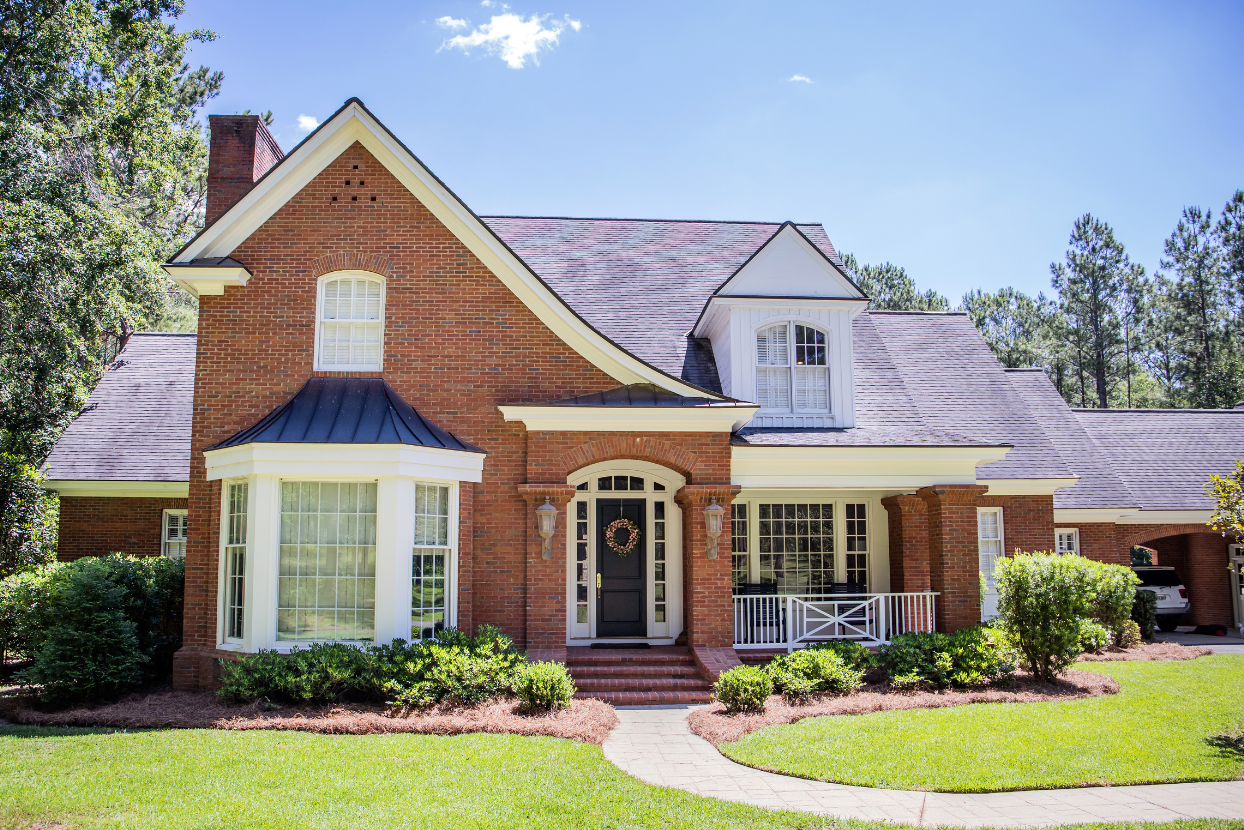
Brick is the one material where the honest answer sometimes is do not paint it at all. Painting brick is a one-way decision, because once it is coated it needs recoating on a cycle from then on, and raw brick that was breathing freely no longer can. When a homeowner in a Gwinnett HOA community does want a painted-brick look, the material choice matters more than on any other surface.
"Brick has to breathe. In our humid climate, moisture moves through masonry constantly, so we use a breathable masonry paint that lets vapor escape. Seal brick with the wrong coating and you trap water inside the wall, and that is when you get spalling and blistering that no repaint will fix."
The plan on brick is a thorough pressure wash, a masonry conditioner or bonding primer suited to the surface, and a breathable acrylic masonry paint or, where the situation calls for it, an elastomeric coating. Efflorescence, that white powdery bloom, has to be cleaned off and its moisture source addressed first, or it will push right back through the new coat. On mortar joints and any hairline cracks we seal before coating so water is not routed straight into the wall.
Can You Paint Vinyl Siding in Georgia?
Yes, you can paint vinyl siding, and on faded older subdivisions it can be a real alternative to full replacement. The catch is a hard rule that most DIY jobs miss: you cannot go significantly darker than the original color. Vinyl absorbs heat, and a dark coat on a west-facing wall in a Georgia summer can push the panel past its heat tolerance, causing it to warp, buckle, and pull loose from the clips.
The right approach is vinyl-safe paint. Sherwin-Williams and Benjamin Moore both make acrylic formulations engineered specifically for vinyl, rated to stay within the material's heat-absorption limits so the panels do not distort. We cover the heat rules, color limits, and prep in more depth on our guide to painting vinyl siding on metro Atlanta homes.
Prep on vinyl is a proper pressure wash to strip chalk, pollen, and mildew, followed by full drying. Clean, dry, chalk-free vinyl takes the specialized coating well and can look fresh for years. If your vinyl is faded but structurally fine, painting it is often the practical call.
How to Paint a Stucco Exterior the Right Way
Stucco is a masonry-family surface, and like brick it has to breathe, but it comes with its own failure mode: cracks. Stucco cracks are the normal result of settlement and freeze-thaw movement, and if you paint over them without addressing them first, water runs straight behind the stucco and the coating fails from the back. On stucco, the crack repair is the job. The paint is almost the easy part.
Our stucco sequence in this market goes like this:
- Pressure wash to clear pollen, mildew, and any loose material from the textured surface.
- Fill and seal every crack with an elastomeric patch or flexible sealant, because unaddressed cracks are the number one reason a stucco repaint fails early here.
- Prime with a masonry primer suited to the surface, so the finish coat bonds and moisture behavior stays predictable.
- Coat with a breathable acrylic or an elastomeric system, which bridges hairline cracks and lets vapor escape rather than trapping it.
Stucco is a strong surface when it is prepped correctly, and it tends to hold a repaint on the longer end of the window in our climate. But it punishes shortcuts. Painting over open cracks or skipping the breathable coating is how a stucco job that looks perfect on day one blisters by the following summer.
When Repainting Is Not the Right Call Yet
We would rather tell you the truth than book a job you do not need. If your fiber cement or stucco is under about five years old, the color is holding on the shaded walls, and the only issue is a chalky film from spring pollen and summer grime, a professional pressure wash may be all you need for now. Nobody's perfect, but we get pretty darn close, and part of getting close is telling you when the honest answer is to wash it and look again next spring rather than sell you a full repaint. If the fade is still there after a clean, or peeling shows up at the trim, that is when it is worth a real inspection.
Why the Material Determines the Prep, the Primer, and the Paint
The thread running through all five surfaces is simple: the material decides the plan. Fiber cement wants flexible acrylic and sealed joints. Wood wants the longest prep and stain-blocking primer. Brick and stucco want a breathable masonry system and crack repair first. Vinyl wants a heat-rated, vinyl-safe formulation and a color no darker than the original. Use one plan for all of them and some of them will fail.
Every SPPI exterior project starts with a full inspection to identify the siding material and its condition, followed by a pressure wash, thorough surface prep, any wood repair, and premium Sherwin-Williams and Benjamin Moore coatings matched to the surface, all applied by our own trained, W-2 crews under daily English-speaking foreman supervision. We are fully licensed, bonded, and insured, and our residential exterior work carries a standard 3-year warranty against peeling and flaking.
Frequently Asked Questions
What is the best exterior paint for wood siding in a humid climate?
A premium 100 percent acrylic latex over a stain-blocking primer, applied to fully dry wood on a dry, moderate-humidity stretch. In Georgia the product matters less than the timing and the prep. Wood has to be pressure washed, scraped back to sound material, spot-primed at bare spots, and given time to dry before painting, or trapped moisture leads to blistering and early peeling. We use premium Sherwin-Williams and Benjamin Moore acrylics as standard on wood.
Can you paint over vinyl and brick, or should you replace them?
Both can be painted successfully. Vinyl takes a vinyl-safe acrylic and must stay at or lighter than the original color so it does not absorb heat and warp on sunny elevations. Brick can be painted with a breathable masonry coating, but it is a one-way decision that commits you to a recoating cycle, so we walk homeowners through that trade-off before starting. During a free estimate we will tell you honestly whether painting or leaving the surface as-is is the better call for your home.
Does stucco need special paint?
Yes. Stucco has to breathe, so it needs a breathable acrylic masonry paint or an elastomeric system rather than a standard siding paint that would trap moisture behind it. Just as important, every crack has to be filled and sealed before painting, because open stucco cracks are the most common reason a stucco repaint fails early in our freeze-thaw climate.
Get a Straight Read on Your Siding
The surest way to know the right plan for your specific siding is to have someone who works these Georgia homes look at it. We offer free, detailed, itemized estimates with a 48-hour response window, and we guarantee no change-order surprises. The number we quote is the number you pay. Call us at 770-985-3075 or request one online.
Learn more about our professional exterior painting across metro Atlanta, read about SPPI's exterior painting process and warranty, or see how we handle exterior painting in your Gwinnett County city.
Request your free exterior painting estimate today and let Southern Perfection Painting match the right system to your siding before the next Georgia summer.